

From sourcing the same paper used by Studio Ghibli to reworking the film from scratch: inside the making of Spirit Jumper
I chat to multi-hypenate artist spktra about the intricate and painstaking work that went into bringing his animated music video to life

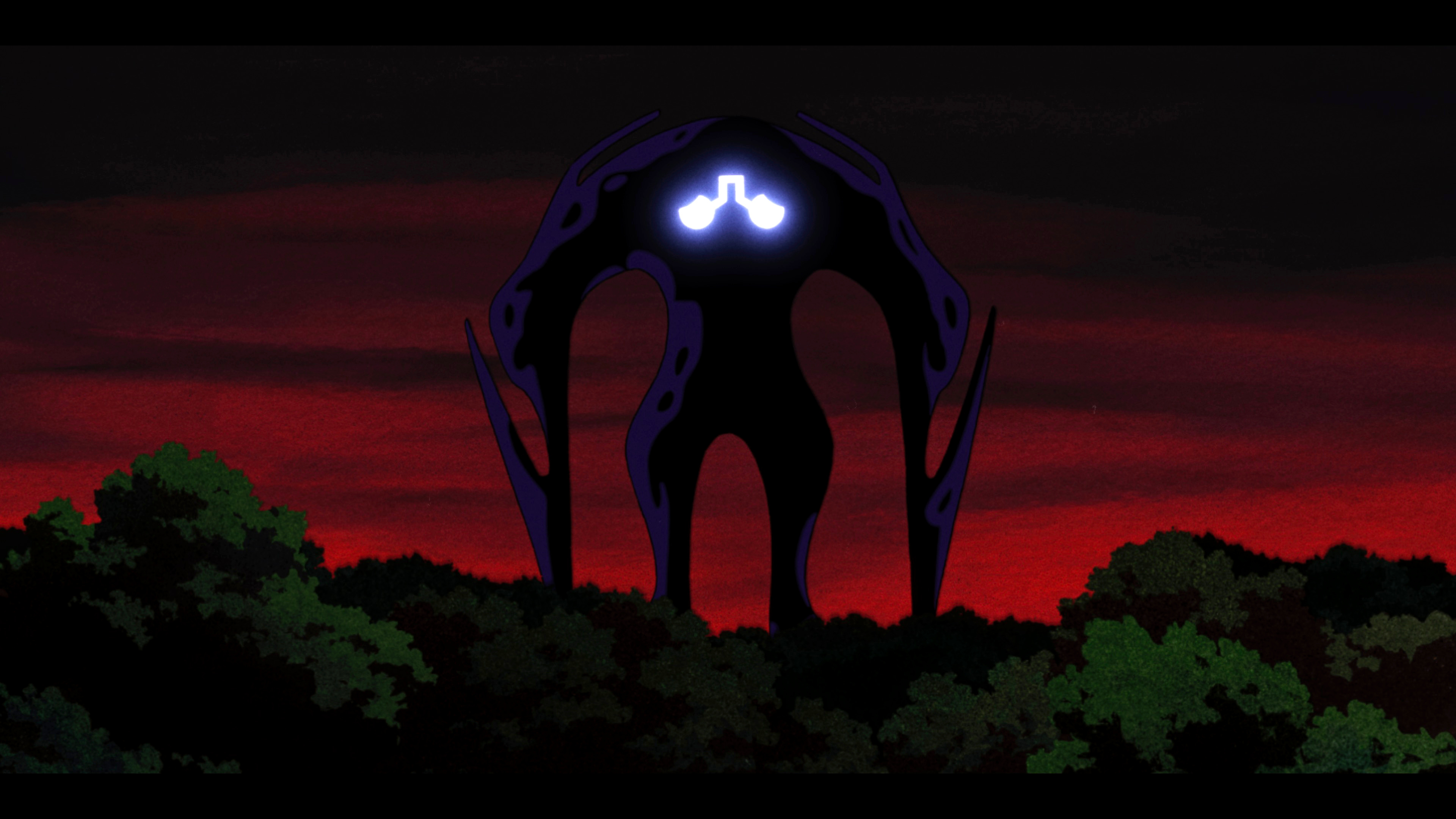
Here’s the thing I love about animation as a medium. It brings together all artistic disciplines, blending them into one wholly unique and completely human work. Films like Akira, with its attention to colour and light, and Coraline, with the hours upon hours of work that goes into animating one second of stop-motion footage, show the painstaking (and entirely human) dedication that goes into animation.
Recent works like the Spider-Verse films and K-Pop Demon Hunters show just how much this artistry can connect with audiences in a way that few other mediums can. That’s why something like Spirit Jumper, the new animated music video by producer spktra (Josh Fagin) is so special.
The film took 5 years to complete and takes inspiration from, amongst others, Batman: The Animated Series and Angel’s Egg, painstakingly digitising the processes used to give those works such rich texture and life. Whether it’s shipping in the exact paper Studio Ghibli uses to draw the backgrounds for their films or its tweaking the films lighting the day before release, the process that went into making Spirit Jumper is exactly why I love animation.
This music video and Fortnite trailer are exactly why I’m learning to become an animator

What inspires you? A favourite film? Or book? Maybe a song that gets you in the creative mood. More than likely, it’s a combination of all of those things and more, many you may not even realise. For me, I’ve loved animation since I first watched Recess
Fagin was kind enough to take time to answer some of my questions about the process of making the short including early development, animation and advice for novice animators like myself. This conversation, like the film itself, is incredibly inspiring giving me a whole new appreciation for the artistic process and the power of animation.
First of all, why animation? What was it about the medium that made it feel right for this project?
The entire time I was writing the song (and album it’s a single off of) I always had it in my mind that I wanted something animated alongside it. It’s been one of my favorite mediums for as long as I can remember. Animation and producing music always felt similar to me in that you have to build out the world you want for it to exist. When I was writing Spirit Jumper, it just felt like something that HAD to have something animated alongside it.


You mentioned in the interview with Cartoon Brew that you were keen for the short to tell a story and not just feel like animation over music. I’m interested in how you developed that story? Was there a script or did it start with the storyboards?
I started writing a rough version of the story around May 2021 and began storyboarding it not long after. At that point I wasn’t sure what I wanted the film to look like. I wrote it over the next year in addition to building out the animatic because I felt that for the story to feel the way I wanted, it has to be as tight with the song as I can make it.
The story overall changed and evolved so many times, mainly because I was learning everything as I went. Also, a lot of details that made sense in writing didn’t work so well once I saw it with the music. It became a combination of writing, drawing sketches, trying it in the edit to the music and tweaking it all from there.
“I went as far as tracking down the paper Studio Ghibli uses to paint their background with, ordered it from Japan and scanned a bunch of them in to process all the backgrounds with.“
There are some particular shots later in the short where the colours and lighting evoke episodes of Batman: The Animated Series and Batman Beyond, what was it about those projects (and Neon Genesis Evangelion and beyond) that inspired you? And what was it like working with an artist like Glenn Wong, who worked on projects like Batman Beyond?
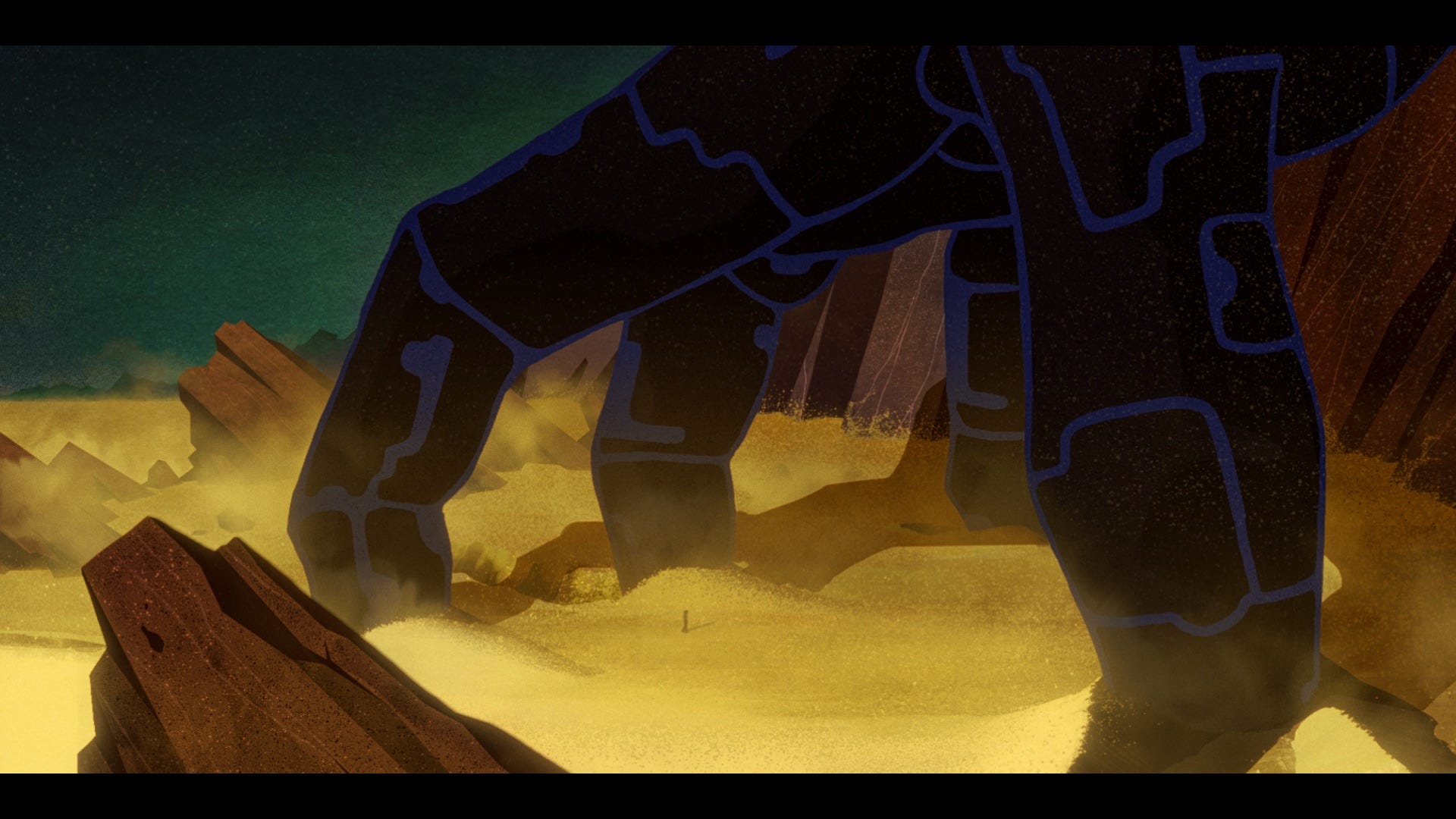
So much. Batman: The Animated Series was the first show I ever loved when I was kid. It stuck with me my entire life, and as an adult I started to appreciate it in a totally different way. The texture is the main thing I pull from it. The atmosphere of the backgrounds and the mood of the entire show is something that I knew I wanted to pull from. Specifically the usage of airbrush and paint splattering to really give a grittiness to it. Airbrush isn’t used at all in animation anymore, and hasn’t been for a while. I felt like part of the “look” of older animation was the prevalence of the airbrush, but in the switch to digital it disappeared. We spent a while trying to replicate the splattering technique digitally in a way that felt believable.
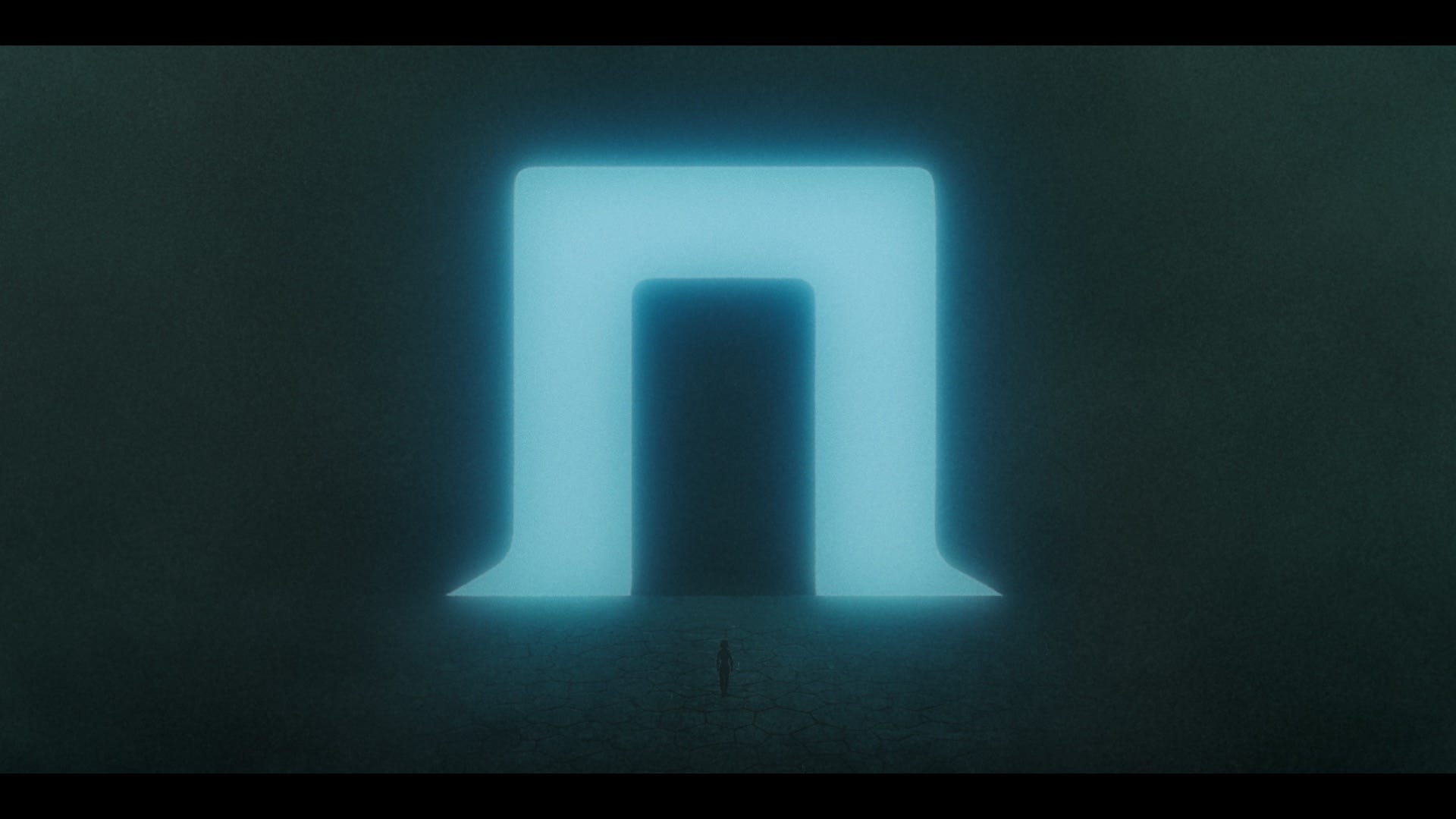
Also, I loved how you could see the texture from the paper used to paint the backgrounds. That applies to most older animation. I’m sure it was something they tried to disguise, but it gives everything a really tactile feel. I went as far as tracking down the paper Studio Ghibli uses to paint their background with, ordered it from Japan and scanned a bunch of them in to process all the backgrounds with. They have nothing to do with Batman, but the whole film was an attempt to mix a lot of disparate influences together filtered through my own view.
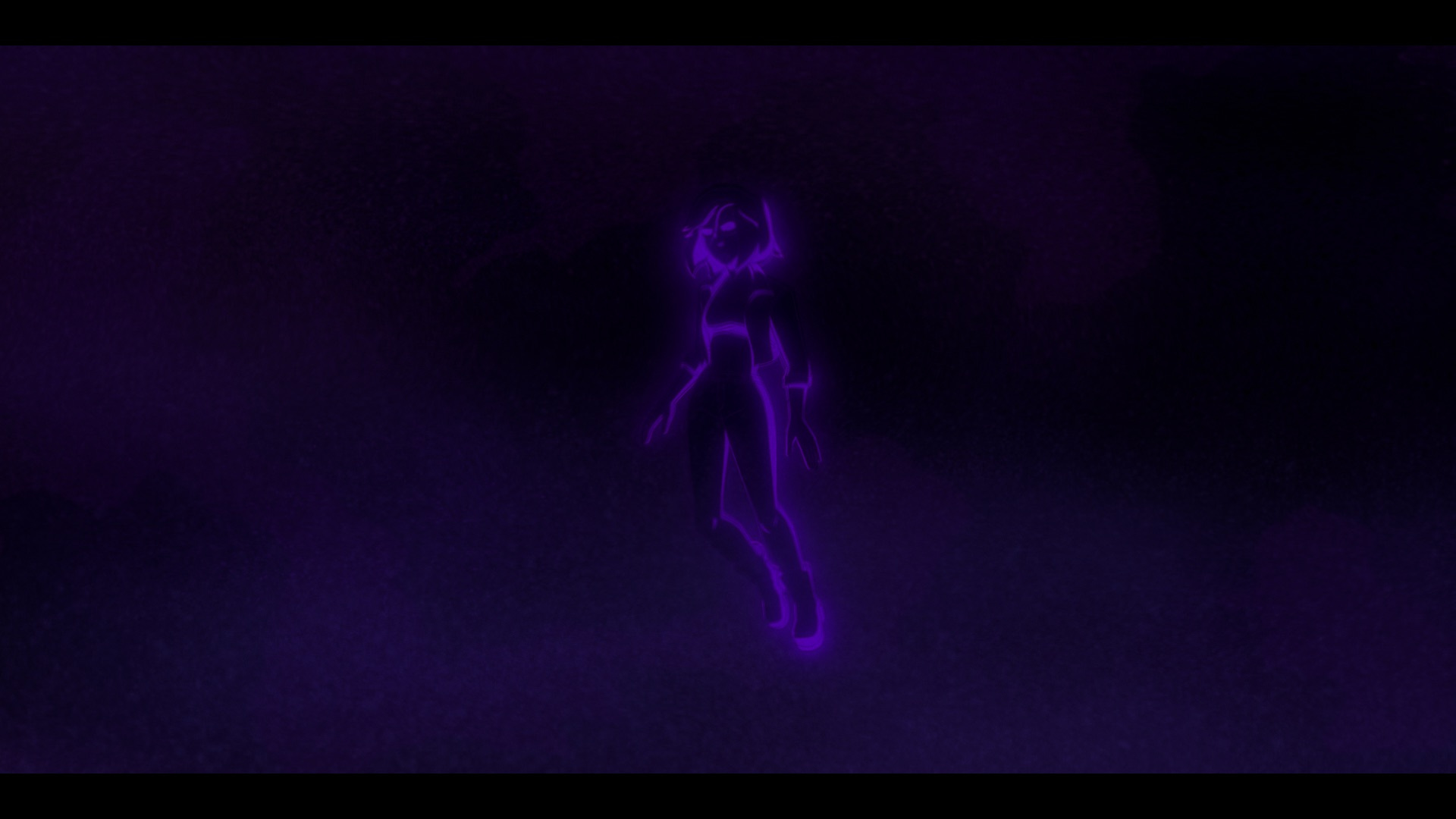
With both Batman: The Animated Series and Batman Beyond, the characters are such a defining aspect of the legacy of those shows. I had it my mind that I wanted the character to feel like she could have come from that world, and had spent a lot of time trying to bring together images of what I wanted the main girl to look like.
I tried a few different character artists before Glenn, but nothing felt the way I wanted. I cold emailed Glenn and sent an early version of the animatic hoping he’d be available to do the character and luckily he said yes. He understood what I was aiming for, probably did 2 or 3 small revisions and then we had the look. Working with him was frictionless, he just nailed it. He recommended me to Chris Hooten who did the color key1 for her and the character was done. That was the hardest thing to accomplish in the beginning of the project because I knew for the film to be any good it needed to have a quality character model with quality turnarounds. It was a really big turning point in the whole project.
Digging into your process a little more, how did you learn about the animation pipeline in order to produce the short? Or did you develop your own workflow alongside the team? If so, what did that process look like?
I spent a lot of time reading everything I could about the animation pipeline and watching as many behind the scenes or documentary footage about animation productions while I was writing and making the animatic as I could. I knew I had to be able to communicate as clearly as possible with anyone on the project in all the different roles.
What worked best for me was to keep researching and reading, then re-read it all and catch anything I missed the first time through. I did that periodically because you never know what piece of information might have a different meaning or context at a further point in the future. I also read and researched a lot about filmmaking in general. Seeing how other filmmakers handle creative problems in pursuit of trying to make something ambitious was really helpful in figuring out how to problem solve situations for myself.
As a musician first, how did you balance your work on the film with creating music?
The hardest balance wasn’t music, but the software side. I also wrote the software I used to make the music and released it through my Noir Labs imprint. I needed to maintain them and make sure if any bugs came up, they were fixed quickly in addition to adding new features. Throughout the production I was juggling the production itself, the coding side at Noir Labs and then music.
I only ever worked on one thing at any given moment because I know if I’m bouncing between too many things on a given day, then I don’t accomplish anything productive. Music, coding and the film all require focus on different things, so pivoting between them throughout the production process was actually recharging. Music and film are more emotional and abstract whereas coding is logical. Switching between different modes of thinking kept me from burning out on either one.
“I went through as much as I could frame by frame to figure out pacing and timing. It’s all very musical. Even though I wasn’t physically animating, communicating about it felt like I was talking about music.”
Rhythm is key to good animation and it’s something you shout out in your chat with Cartoon Brew. How did you learn the particular principles of animation ahead of starting work on the project? Were there any specific resources or tools you used?
I watched a lot of shows or movies I loved and also watched a lot of bad animation. The bad stuff makes it really clear what not to do better than trying to figure it out through watching the best stuff. I went through as much as I could frame by frame to figure out pacing and timing. It’s all very musical. Even though I wasn’t physically animating, communicating about it felt like I was talking about music. Resources that helped a lot were The Illusion of Life by Frank Thomas and Ollie Johnston, and The Animator’s Survival Kit by Richard Williams.
Building on this, do you think animation is uniquely suited to the music video format?
I think animation works for all formats and it’s flexible enough to handle any genre. My least favorite parts about animation in music videos is when it’s just random animation loosely synced to the music. Sometimes animated music videos have the ability to be more ambitious, at least in the environment in the entertainment industry right now. The coolest stuff in animation is produced by smaller teams with smaller budgets because they’re able to be more nimble than within a larger studio system. We tried really hard to make the story followable even without the music.
You talked about studying how film affects animation and the lack of resources available, were there any you did find particularly helpful?
There’s an abundance of information about film in live action, but basically zero about how it affects the look of animation. I had a theory that the look of cel animation2 is a combination between the physical art and photographing it to film.
“The final version of Spirit Jumper is a direct result of learning from everything I messed up on in the first version.”
I knew absolutely nothing about film when starting the project, so like every other part, I started reading and watching as much as I could. The research on film was done in tandem with collecting as much information on the production process within traditional cel animation. They were inherently linked. Once I started learning about the characteristics of film (which is varied to begin with), I started re-analyzing animation I liked and seeing parts of it differently.
I took it piece by piece and focused on how film affected (or didn’t affect) the image. I spent a lot of time looking at production cels for sale at Heritage Auctions and comparing them to the scenes in the actual release, then noting the differences. Heritage Auctions takes some of the best quality photos of cels so they were a really great resource for comparison.
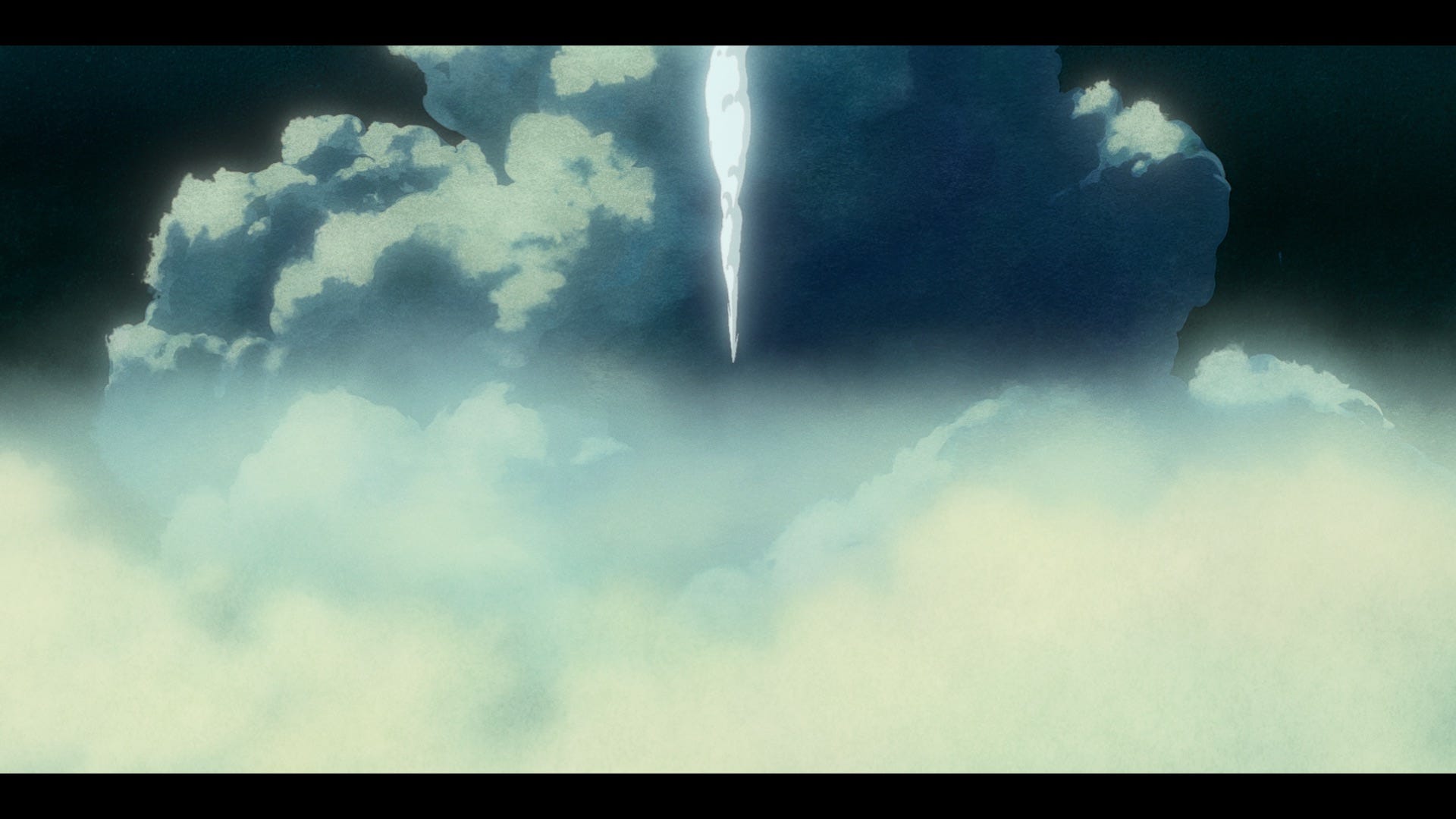
I collected so many images and sorted them into categories based on what I was paying attention to. Right up to the release of Spirit Jumper I was still learning things and applying them in the final edit. An example of this would be the light effects. They were by far the hardest to try to recreate digitally. The night before Spirit Jumper was uploaded I was still dialing it in.
You shout out texture as something key to the painterly aesthetic of your film and the films that inspired it, is there anything else you’re seeing in the industry today, particularly in 3D, that you feel captures that texture?
Texture is my favorite part in everything I love from music to painting to movies, and what I try to inject into everything I try to create. I haven’t watched many recent 3D movies, so I’m not sure. I loved the first Spider-Verse movie though. I remember walking out of the theatre feeling the same way I felt the first time I saw Akira. I think texture in animation should be shorthand for reality, but also stylistically so. I think 3D movies sometimes focus too much on texturing looking “realistic.” It’s technically impressive, but boring. It’s not 3D, but I really love all the stuff the students at Gobelins make. All the shorts are so unique and varied.
What does a typical creative day look like for you?
I don’t know if I have a typical creative day. It’s so varied based on what I’m working on. The only constant is I treat it like a 9-5 even though I work from home. I know I do my best work when I take breaks versus when I keep trying to power through problems. This applies to music, coding and Spirit Jumper. I have a habit of trying to solve by powering through them for hours without breaks only for me to step away for 15-20 minutes and come back with the solution crystal clear.
You mentioned now knowing what you’d do differently on future projects, can you describe some of the key lessons you learned from making Spirit Jumper?
The whole idea to even attempt to direct Spirit Jumper was trying to prove to myself that I could do it. I had so much imposter syndrome throughout the entire production because I was coming at it from zero experience in the animation industry and zero ability to draw. It seemed like an insane idea to attempt, but I felt like I needed to do it.
When doing the animatic, the version I thought was the final version really was about 10 versions before the final. I moved forward with production prematurely, and ended up having to scrap everything because I knew it wasn’t working. On a story level, art level and animation level. This was a completely different team than the team that made the version out now. That amounted to about a year of work, but I don’t consider it a waste.
The final version of Spirit Jumper is a direct result of learning from everything I messed up on in the first version. In hindsight, to achieve what I wanted to with this short film, I should have spent longer in pre-production dialing in the story and what I didn’t want. The other lesson I learned was that because I had never seen what a full production looked like from beginning to end, I was too precious about the way certain things looked in isolation and not in the context of the film as a whole. The takeaway was if you’re fixated on a detail and it doesn’t look that different than the last 5 (or 10 times) you messed with it, then you’re too hyper fixated.
Lastly, as someone who started this project with no animation experience, do you have any advice for would be animators (like myself) who are at the start of their journey?
Patience above all. Be willing to make as many mistakes as possible so you can learn from them quickly. I made so many mistakes on this project, but each one was something that I learned a lot from.
Pay attention to what you don’t like or what not to do more than what to do. Watch as much as you can and then rewatch the stuff that stands out to you the most. I didn’t know how to draw at the beginning of this project (and still don’t), but I know one of my strengths is creative problem solving. If I could lean on that and be willing to put as much work in as I could to offset whatever abilities I lacked, I knew I could figure it out. For the longest time I couldn’t see the finish line, but little by little it came into view, so just trust the process.
A color key or color script is a series of images that capture scenes from across an animated film. It is designed to represent and develop the films colour palette and help you find and visualise the emotional journey and tone of a story.
As noted by Sam Kench over at Studio Binder, “‘Cel’ is short for ‘celluloid,’ as the images were drawn on thin, transparent sheets of plastic material. This material was sometimes but not always celluloid. In traditional cel animation, each individual frame is drawn onto a cel in black ink.”
I’m glad we were able to chat; amazing questions. Hopefully people get some insight into the process from this!